




 14 Min
 In Clinical reviews

Follow this topic

Bookmark

Record learning outcomes
|
||||||||
|
Infestations still carry a significant degree of social stigma – and pharmacies are frequently the first port of call for people seeking advice and treatment for themselves or their families. This article reviews the main organisms responsible for infestations, key symptoms, practical advice and management options.
An obligate parasite is an organism that requires a living host to survive and complete its life cycle. When such organisms live on the surface of the host, either on the skin or hair, they are referred to as ectoparasites. Three of the most common affecting humans are lice, bed bugs and mites.
Pediculosis refers to infestation with lice, insects that have coexisted with humans for millennia. In 2000, researchers discovered an intact louse egg on human hair from an archaeological site in northeast Brazil that was 10,000 years old.
Lice have also been found in mummies of Egyptian pharaohs. It is thought that Egyptian priests shaved their bodies completely every two days to prevent infestation.
Three species of lice have adapted to living on a human host:
- Pediculus humanus capitis (head lice)
- Pediculus humanus corporis (body lice)
- Pthirus pubis (pubic lice).
This section will only focus on body lice and pubic lice.
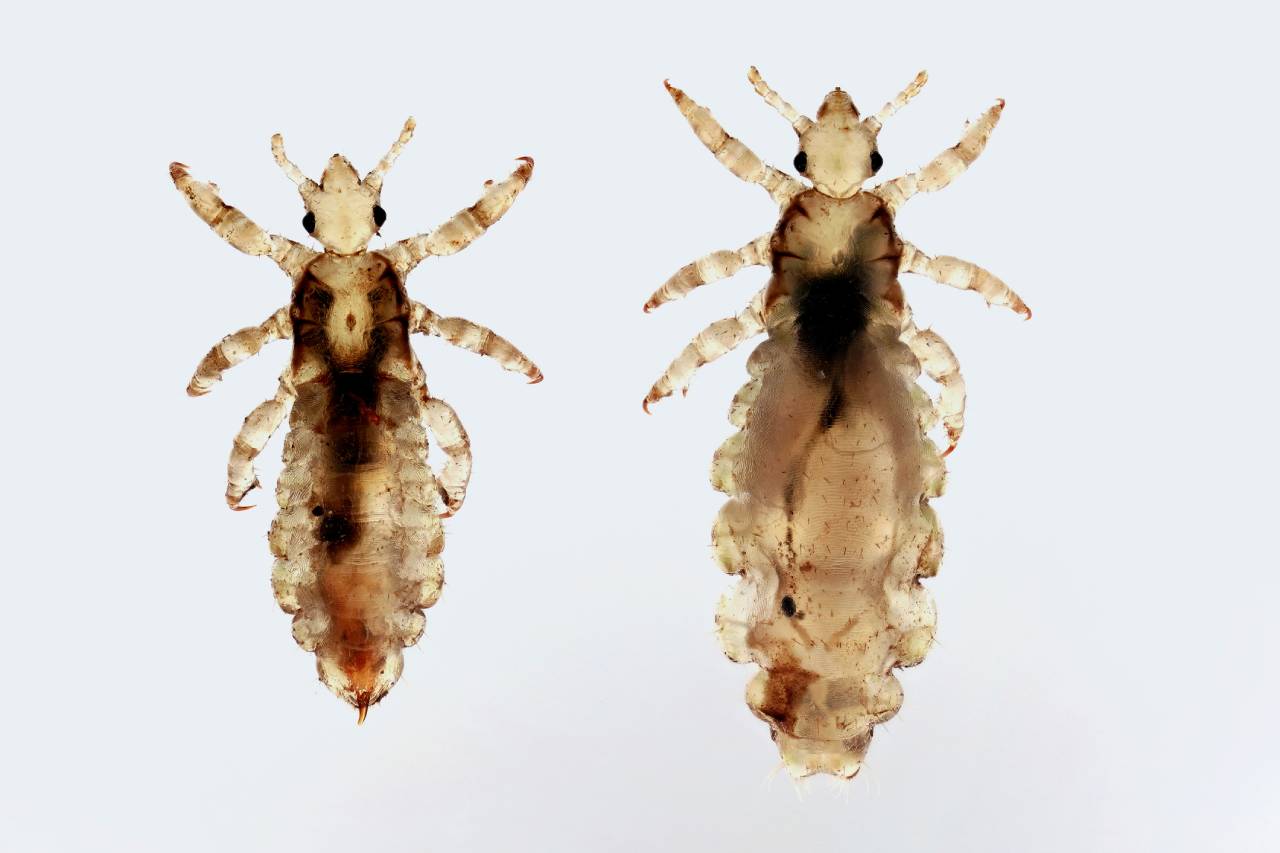
The louse has a three-stage life cycle: egg (or nit), nymph and adult. Lice feed on human blood by piercing the skin and injecting saliva with vasodilatory and anti-clotting properties. This prevents clotting and allows feeding without the host experiencing immediate pain or discomfort.
Lice have six legs and can only crawl – they cannot fly or jump. They spread between humans mainly through close physical contact. Infestation through contact with fomites, such as combs, brushes, clothes or hats used by an infested person, is uncommon.
Body lice
Body lice are 2-4mm long, flat and whitish grey, with oval, yellowish-white eggs. Despite the name, body lice do not live on the host but reside in the seams of clothing or bedding, where eggs are laid, moving to the body several times a day to feed. Infestation is more likely when clothes are not changed or washed regularly, so body lice are common among people who are homeless.
The rash from body lice causes intense, persistent itching and small red papules where clothing seams touch the skin, such as the waist, armpits, groin, shoulders and neck. The pruritus caused by the rash is often worse at night.
Body lice can survive for up to 60 days. A key concern is that they can act as vectors for serious bacterial infections, including epidemic typhus, trench fever (Bartonella quintana) and relapsing fever (Borrelia recurrentis).
Patient assessment
Consider body lice in a patient with this type of rash and a history of poor hygiene, limited access to clean clothing, homelessness, or crowded, unsanitary living conditions.
The rash papules may have a central haemorrhagic punctum and, together with linear excoriations or scratch marks, represent the classic signs of an insect bite. Live lice or eggs are unusual on hair shafts, but it is worth examining areas where clothing seams touch the body. Examination of clothing, especially seams of underwear, waistbands and collars, may reveal crawling adults and eggs cemented to fabric.
Differential diagnoses
Other possible diagnoses and distinguishing features are outlined in Table 1.
| Table 1: Common differential diagnoses with body lice | |
| Possible diagnoses | Key distinguishing features |
| Scabies | Burrows (a classic sign) in finger webs, wrists and/or genitals |
| Atopic/contact dermatitis |
Contact dermatitis: often limited to area of exposure to allergen e.g. belt buckle Atopic eczema: presents with history of relapsing/remitting pattern, localised to flexural surfaces Both forms of eczema lesions have no central haemorrhagic puncta |
| Drug eruption | Ask about recent medication use. However, there is a lack of localised excoriation marks and absence of lice either on body or clothing |
| Bed bugs/fleas |
Bed bugs: bites often appear in small linear clusters of around 3 to 4 groups or rows (known as ‘breakfast, lunch and dinner’). Typically found in areas exposed during sleep, such as the face, neck, arms and shoulders Fleas: often present on lower legs and ankles, and cause almost immediate pruritus Absence of eggs or live lice in both cases |
Potential red flags
The following symptoms may indicate bacterial infection and should prompt immediate referral:
- High fever, headache, petechial rash i.e. pinpoint red, purple or brown spots that do not fade or turn white when pressed
- Shin pain with cyclic fevers – potentially trench fever
- Relapsing fever with nosebleeds – potentially Borrelia recurrentis.
Management
Environmental controls: Washing clothing and bedding in hot water (at least 65°C) and then drying them in a high-heat dryer is essential.
Insecticides: These are only necessary for widespread infestations with the observation of live body lice or when environmental controls are impossible. Permethrin 5% cream can be used, applied to the entire body and left in contact for 8 to 12 hours.
Symptom control: Pruritus can be managed with either topical corticosteroids or systemic antihistamines.
Managing treatment failure: Failure to respond to treatment largely occurs from incomplete sanitisation of clothes and bedding, leading to subsequent reinfestation. Although unlicensed, oral ivermectin has some evidence of effectiveness when administered as three 12mg doses once weekly for three weeks.
Pubic lice
Pediculosis pubis is infestation of the pubic area with Pthirus pubis. Eggs are yellow-white, oval-shaped and laid on hair shafts. Adult lice are about 2mm long, grey-white, and may be seen on pubic and perianal hairs, although they can also be found on coarse hair, such as on the legs, armpits or chest.
The term ‘crabs’ is commonly used because of the lice’s crab-like shape and the pincer-like appearance of the second and third pairs of legs, which attach to pubic hair. Pubic lice are usually transmitted through close, often sexual, contact with an infected individual and rarely through clothing or bedding. They rarely leave the host and die within 24-48 hours if they fall off.
Patient assessment
Pruritus in the pubic area, which may be worse at night, is a common symptom but can take up to three weeks to develop after contact with an infested individual. Clinical signs include tiny, rust-coloured specks (louse faeces) on the skin; maculae caeruleae (light blue macules), commonly seen on the lower abdomen or thighs; red papules at bite sites; and small blood stains on underwear.
| Pruritus is a common feature of pubic lice infestation. Washing clothing in hot water is essential |
Examination of the pubic hair area (if appropriate) may reveal visible lice anchored to the base of hair shafts close to the skin, although axillary and upper-thigh hair, chest, abdomen and back should also be examined.
Lice may occur on eyelashes, where they can appear sticky or crusted. Diagnosis is confirmed by identification of live lice or eggs on examination.
Differential diagnoses
Common differentials for body lice are shown in Table 1. However, specific differentials for pubic lice include the following.
- Tinea cruris
- Seborrhoeic dermatitis/psoriasis
- Folliculitis.
Management
Insecticides: 5% permethrin cream (30-60g); 0.5% malathion aqueous solution (100ml). Both are applied to the whole body and washed off 8-12 hours later (or overnight). A second application is required seven days later to kill any hatched lice.
Where lice are found on the eyelashes, Simple Eye Ointment BP is applied to the eyelash roots twice daily for 8-10 days, which is sufficient to suffocate the lice and eggs.
Environmental control: Decontamination of clothing and bedding by washing in hot water (at least 50°C) is essential. If not possible, store items in a sealed plastic bag for two weeks to kill any lice. Avoid close body contact and sharing clothes, bedding and personal hygiene products until the person and their partner have successfully completed treatment.
Sexual health
Where the infestation is thought to have been acquired via sexual contact, partner management is required over the previous three months. Furthermore, it is advisable to screen infested individuals for other possible sexually transmitted diseases.
Managing treatment failure
Treatment failures often arise from insufficient application of topical agents or failure to use a second dose. However, if there is no response to the initial topical therapy, re-treat with an alternative regimen. Any dead nits are adherent to hairs; these can be removed with a fine-toothed comb.
Potential red flags
Consider referral in the following scenarios:
Children with pubic lice: This is uncommon and strongly suggests non-accidental contact and may indicate possible sexual abuse.
Ocular involvement: Infestation could trigger eye problems, including severe blepharoconjunctivitis, marginal keratitis, epithelial keratitis, or secondary bacterial eye infections.
Secondary bacterial infection: Excessive scratching may lead to secondary bacterial infections. Look out for rapidly spreading erythema, localised heat, extreme tenderness (possible cellulitis), fever, chills, and localised lymphadenopathy (swollen, tender inguinal lymph nodes).
Bed bugs
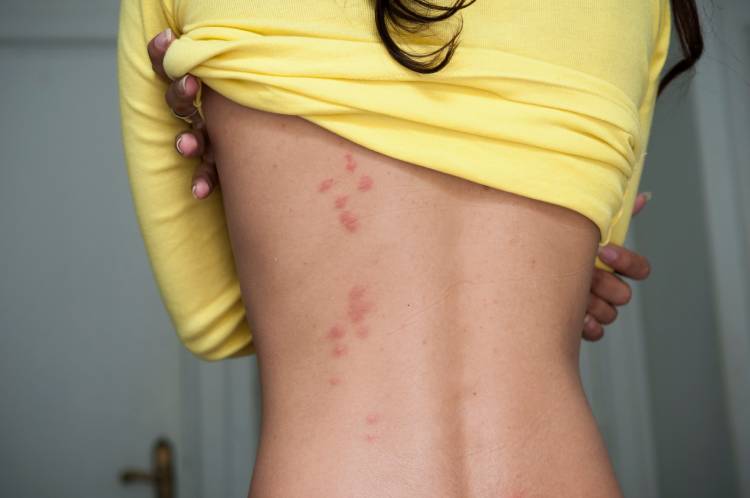
The most common bed bugs that feed on humans are Cimex lectularius and Cimex hemipterus. Bed bugs are 5-7mm long, with a flat, oval, reddish-brown, wingless body. Unlike lice, bed bugs can survive for 6-12 months without a blood meal. They live close to human hosts, often in bed cracks, mattresses, furniture, flooring and walls.
| Bed bugs can be passively dispersed from clothing, luggage or furniture |
Infestation can be passively dispersed through travel or by being carried on clothing, luggage or furniture. As nocturnal insects, they are attracted to body temperature and exhaled carbon dioxide, and feed at night.
Patient assessment
Ask about recent travel, hotel stays or acquisition of new furniture in the previous one to four weeks. Clinically, patients present with a papular exanthem – a widespread skin rash made of small, solid, raised bumps less than 1cm wide. According to a recent systematic review of 84 bed bug cases, the extremities were the most common sites of bites, including arms (71%), legs (60%) and trunk (35%). A papular exanthem was observed in 76% of patients.
Although bed bug bites are traditionally considered to present in a triplicate pattern (‘breakfast, lunch and dinner’), the review found this pattern in fewer than half of cases. Closer inspection should reveal a central haemorrhagic punctum. Patients may also report reddish-brown spots on bedding, representing bed bug faeces.
Differential diagnoses
Possible differentials are like lice (see Table 1). The main consideration is distinguishing bed bug bites from other biting insects. Flea bites can look similar but are often seen on the lower extremities, whereas mosquito bites can be solitary or randomly scattered over the body. A history of outdoor exposure at dawn or around dusk can also support a mosquito-bite diagnosis.
Management
Bed bug bites are self-limiting and resolve within 1-2 weeks without treatment. Where needed, drug treatment to help with pruritus includes oral antihistamines or mild to moderate potency topical steroids. Washing bedding at high temperatures (60°C) is required, although controlling an infestation is difficult and often requires professional help.
Managing treatment failure
Reinfestation, with the appearance of new bites, is a common cause of treatment failure. This can arise due to insecticide resistance or incomplete coverage with the agent during decontamination.
Possible red flags
Bed bugs are rarely a vector for bacterial infections, so any possible red flags are related to patient response. These include:
Severe anaphylaxis: The presence of dyspnoea, diffuse urticaria, angioedema or wheezing requires urgent medical assessment.
Secondary infection: Uncontrolled scratching disrupts the skin barrier, allowing bacterial entry. Suspect secondary infection if patients develop fever or spreading cellulitis.
Scabies
Scabies is caused by infestation with Sarcoptes scabiei var. hominis and is extremely common, with an estimated 300 million cases annually worldwide. The mite is an eight-legged arthropod, invisible to the naked eye.
Adults mate on the skin surface. Infestation begins when the female’s saliva breaks down the stratum corneum, allowing her to penetrate the epidermis and create burrows in which eggs are laid. Infestation requires as little as 10 minutes of direct, often sexual, skin contact. Transmission via fomites is unusual.
Patient assessment
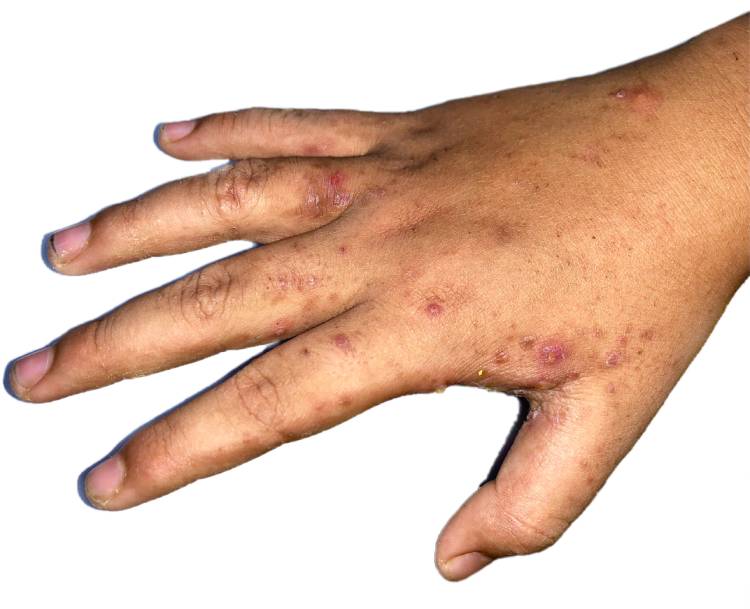
The predominant symptom of scabies is intense pruritus, which is worse at night, due to a delayed type IV hypersensitivity reaction to the mite, its faeces and eggs. This reaction develops 3-6 weeks after initial infestation. Clinically, a papular eruption is commonly seen on the periumbilical area, waist, genitalia, breasts, buttocks, axillary folds, fingers, interdigital spaces, and wrists.
| Transmission of scabies requires as little as 10 minutes direct contact |
Papules are small and frequently excoriated, with haemorrhagic crusts. In males, pruritic penile nodules are also a classic sign. Classic scabies burrows are typically thin, brown lines up to 1cm long, but intense scratching can make them difficult to see. Applying black or blue ink to a suspected papule and wiping it off with an alcohol swab can reveal a burrow.
A second presentation is crusted scabies, which develops among immunocompromised patients, older people or those with neurological disease and reduced ability to scratch. In these patients, pruritus is mild or absent, and the eruption appears as generalised, poorly defined, erythematous, fissured plaques covered by scales and crusts.
Differential diagnoses
The main differential diagnoses include insect bites and dermatitis, as described in Table 1. Insect bites tend not to occur on the hands and wrists. While dermatitis is pruritic, lesions are less likely to produce discrete papules.
Management
Drug therapy: Permethrin cream 5% or oral ivermectin 200mcg/kg as a single dose, repeated after seven days. Both regimens are equally effective, although permethrin is often considered first, and used in children and pregnant women.
Permethrin should be applied to the entire body surface from the neck down, including under the nails, and left in contact for 8-12 hours. A typical adult requires a single 30g tube to cover the body, though two tubes may be needed for larger adults. Close contacts and household members should also be treated.
Environmental control: Wash bedding, clothing and towels, including those of all potentially infested contacts, at a high temperature of at least 60°C. Items can then be dried in a hot dryer, dry-cleaned or sealed in a plastic bag for at least 72 hours.
Managing treatment failure
Post-scabetic itch can continue for up to four weeks after treatment and is managed with crotamiton 10% cream. The appearance of new burrows or papules more than two to four weeks after treatment suggests reinfestation. Most treatment failures arise from what has been termed ‘pseudo-resistance’ due to non-compliance, improper topical application, inadequate timing between doses or unmanaged close contacts.
Potential red flags
Due to disruption of the skin barrier from scratching, the main concern is a secondary bacterial infection such as impetigo, cellulitis or skin abscesses. Refer any patients with fever, malaise, warm skin or a rapidly spreading erythematous rash.
|
References
|

Share:


In Clinical reviews